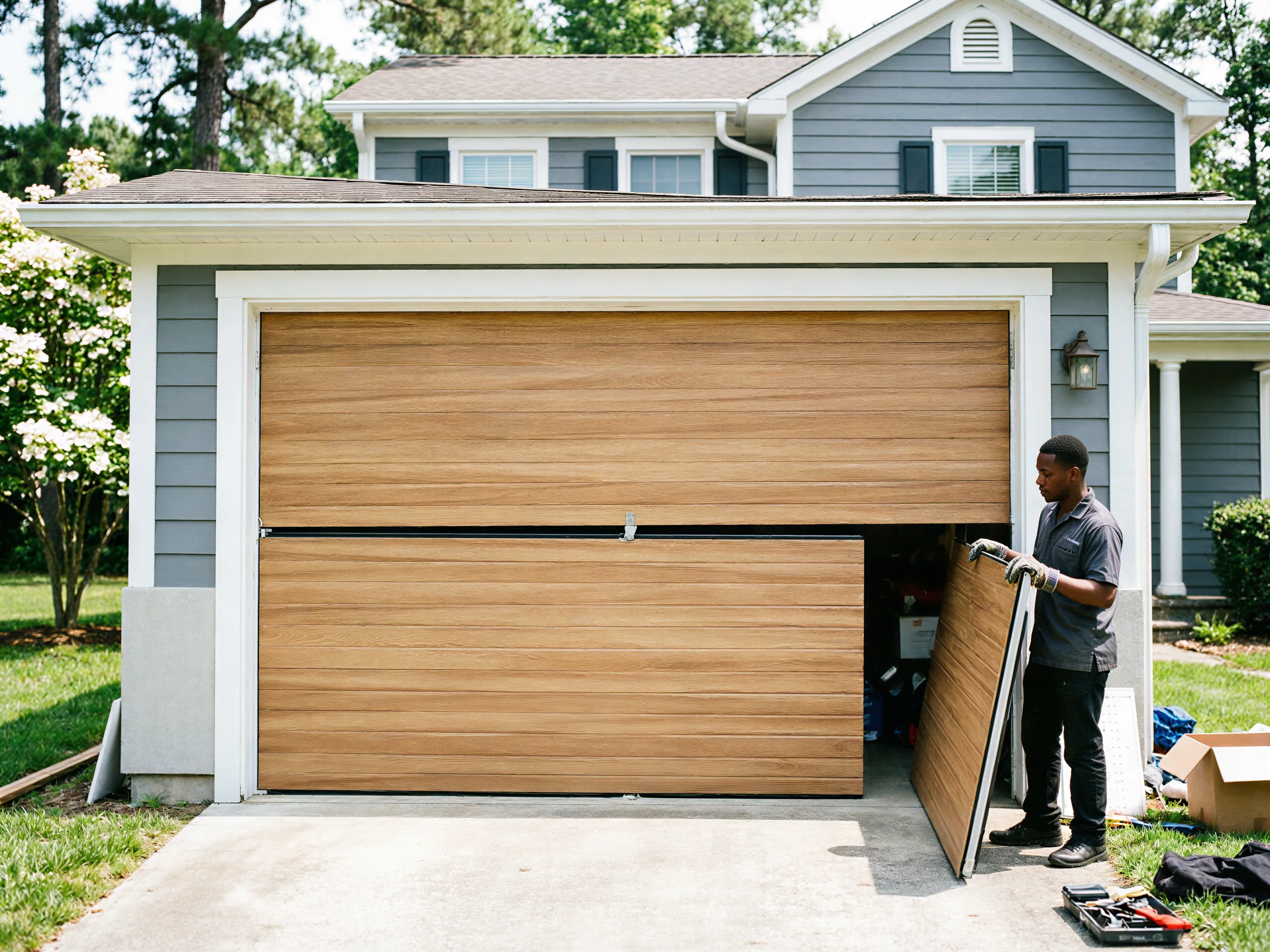
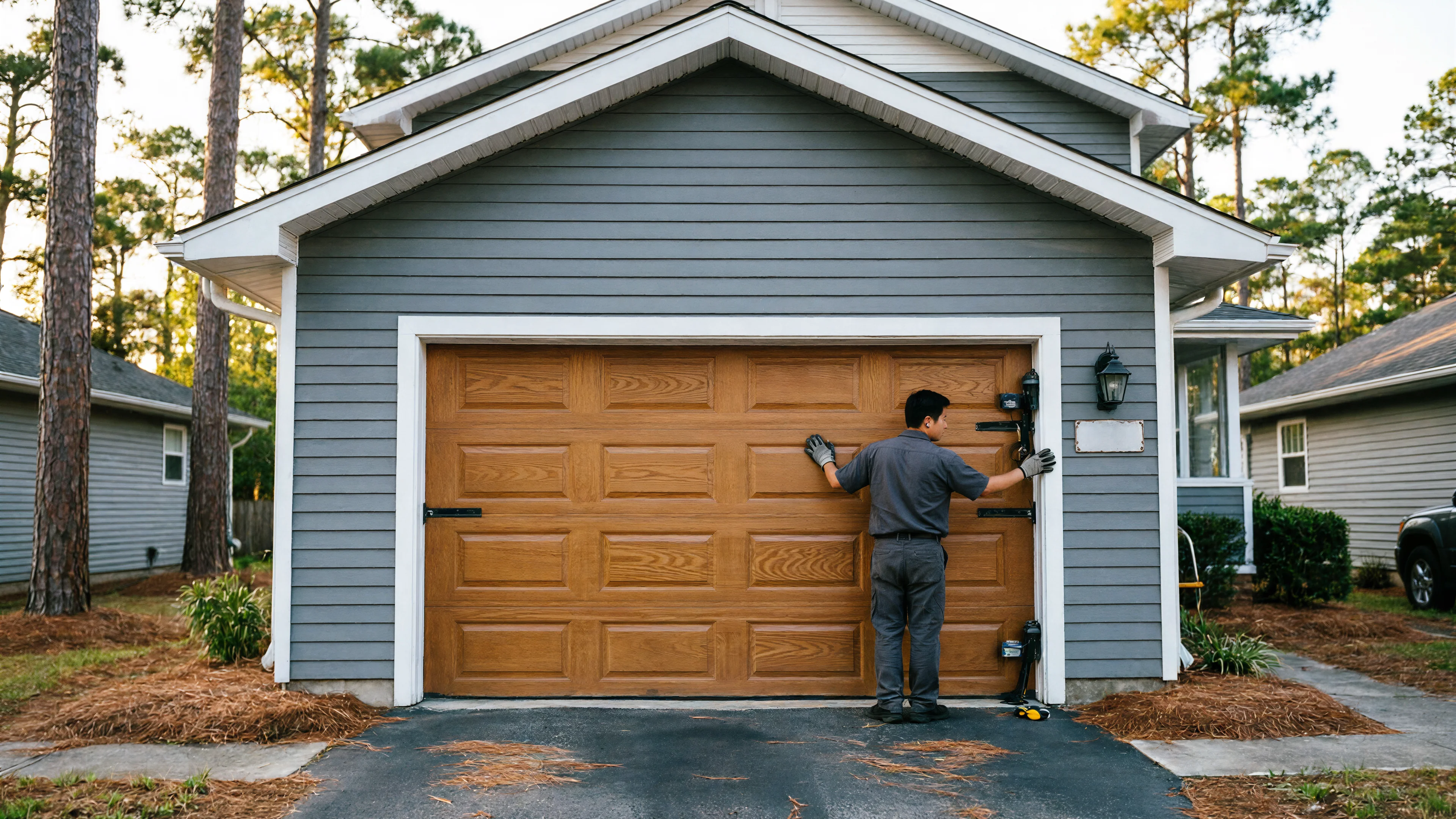
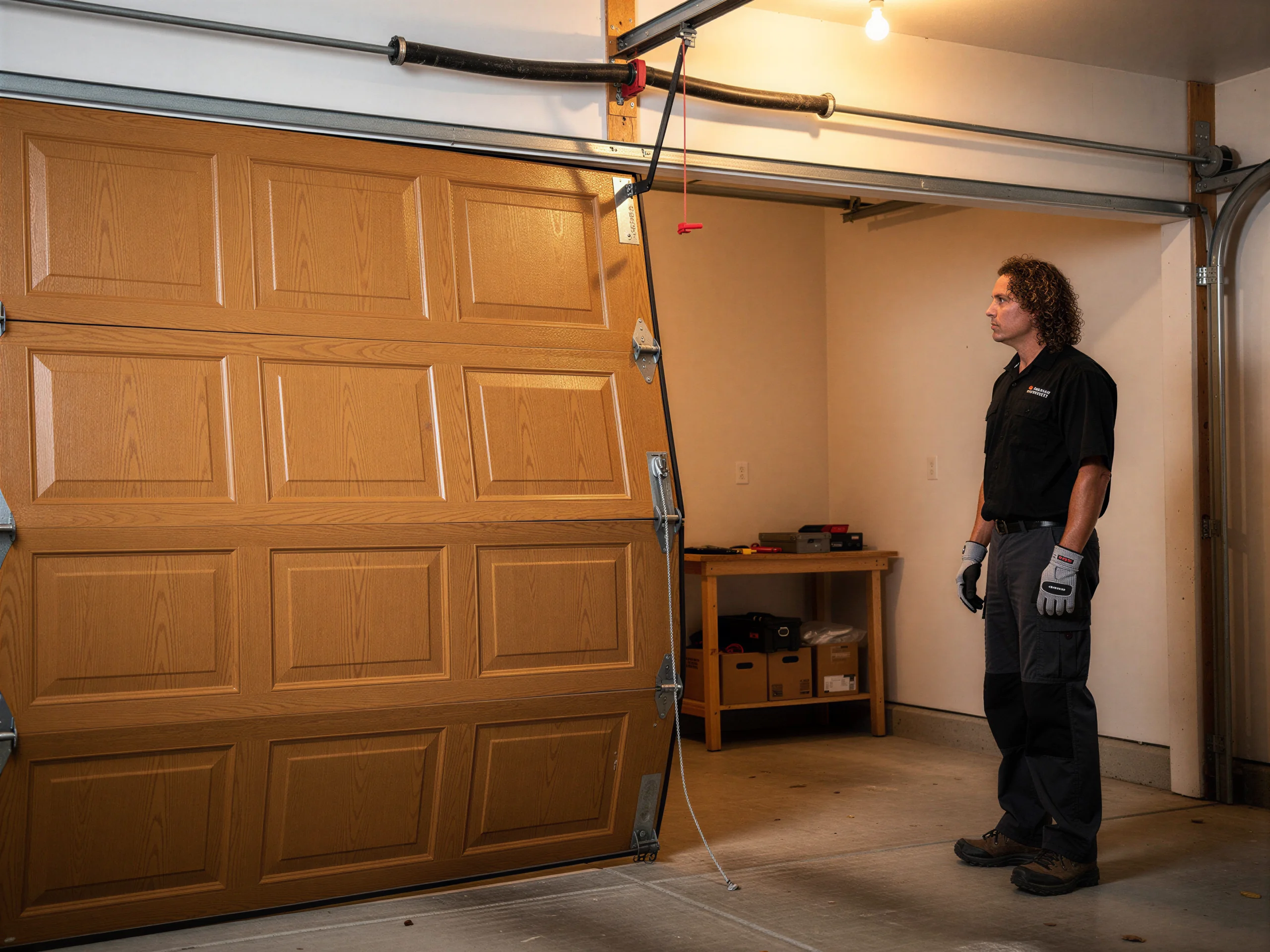
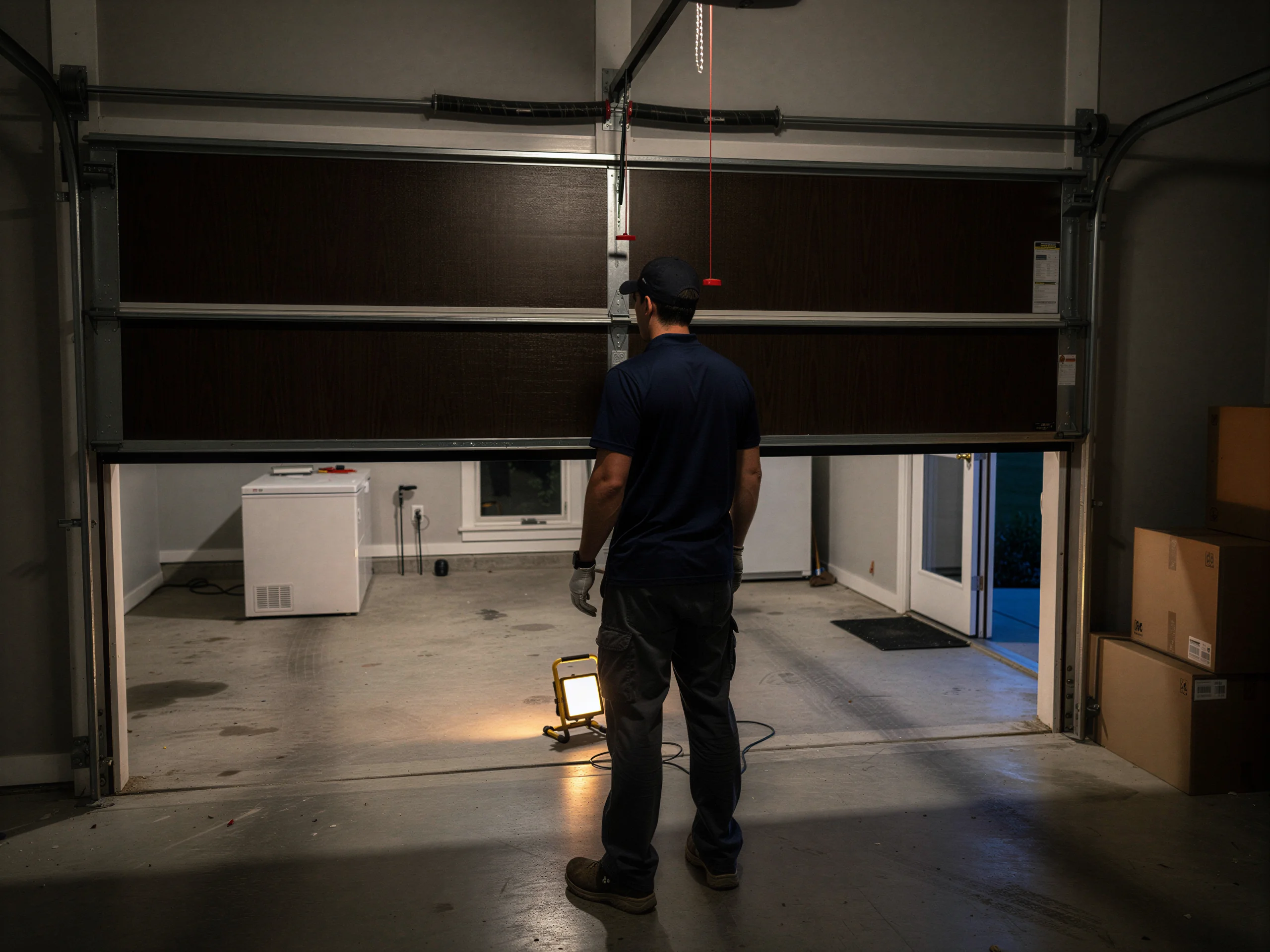
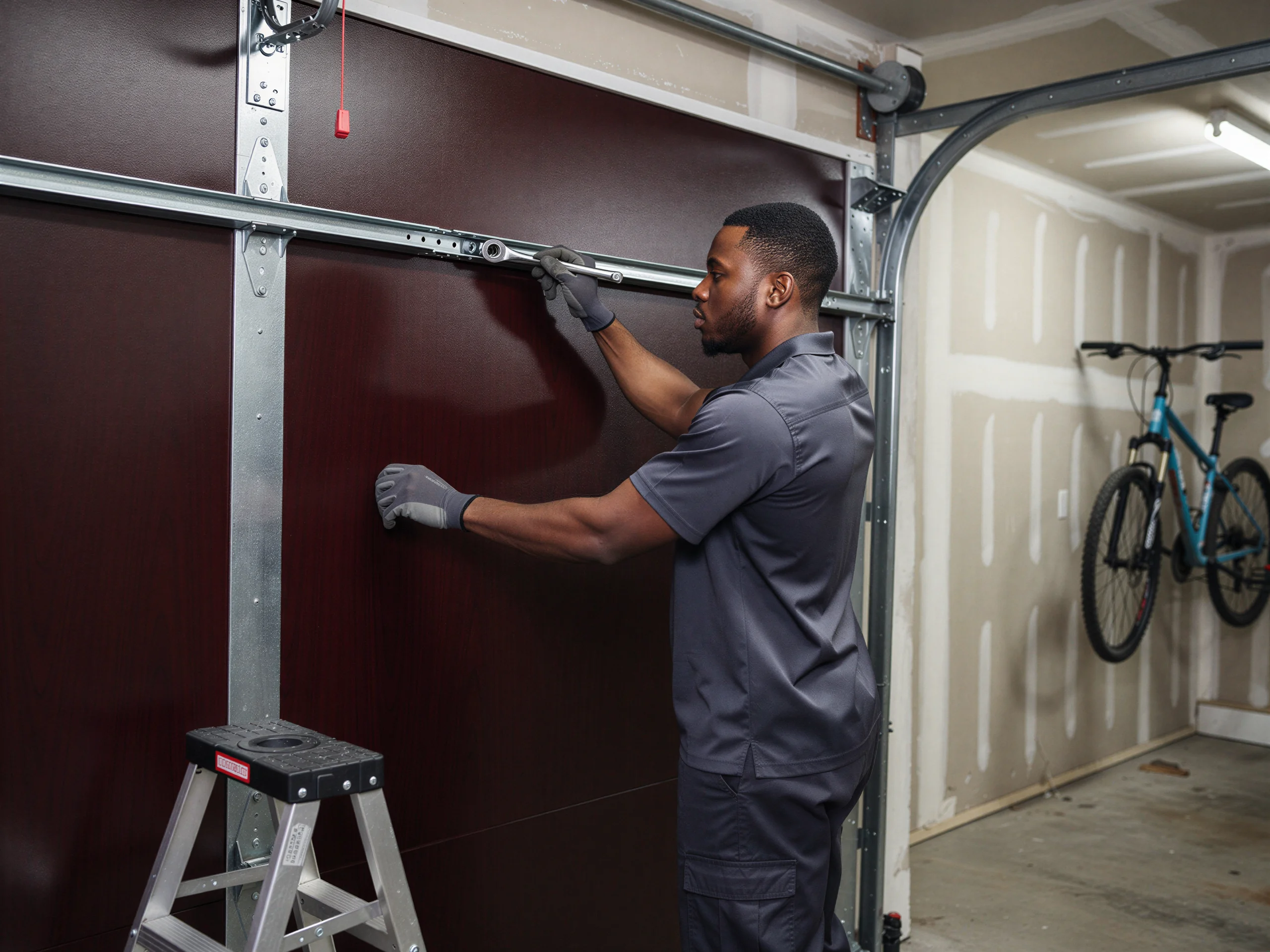
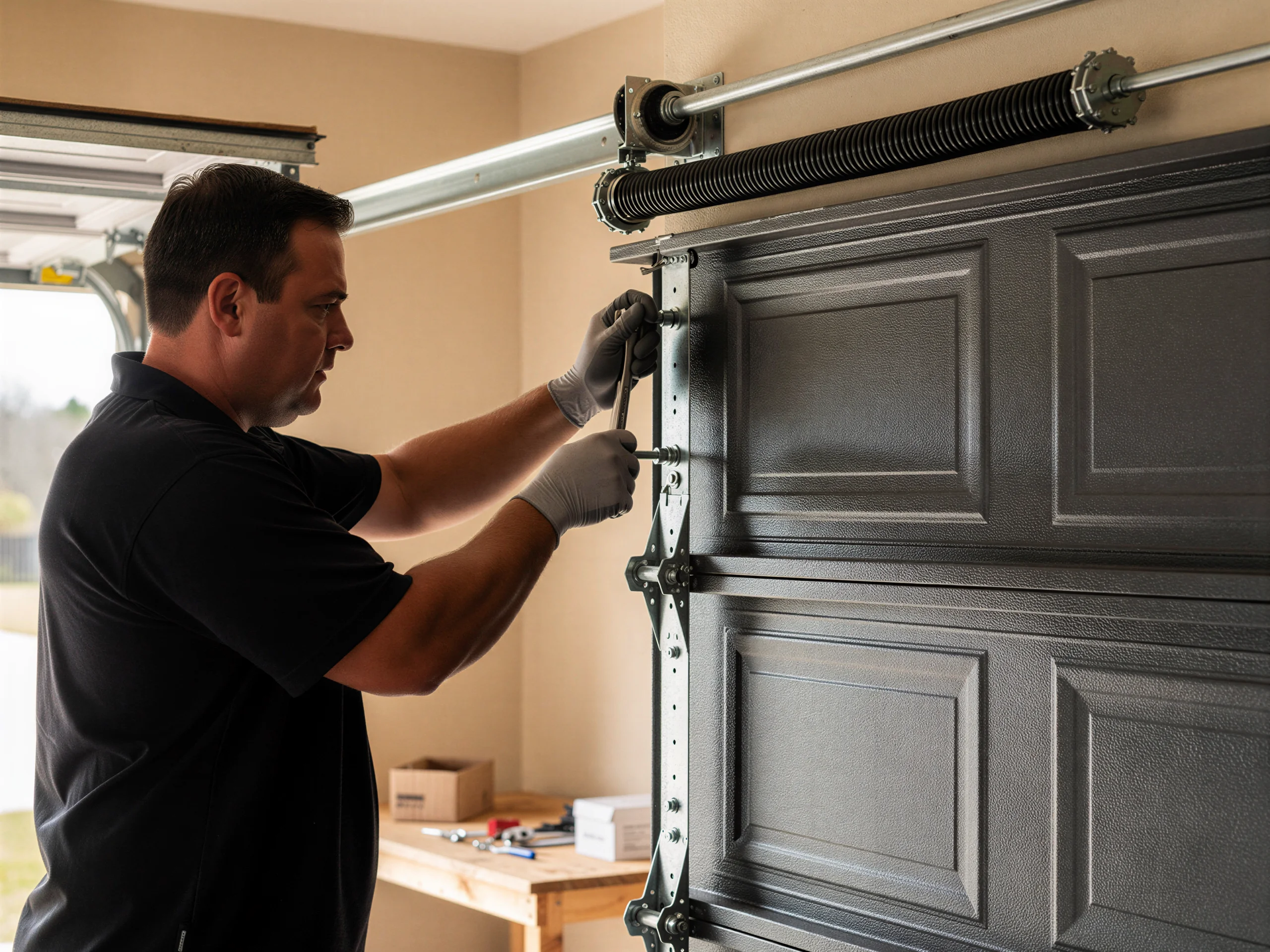
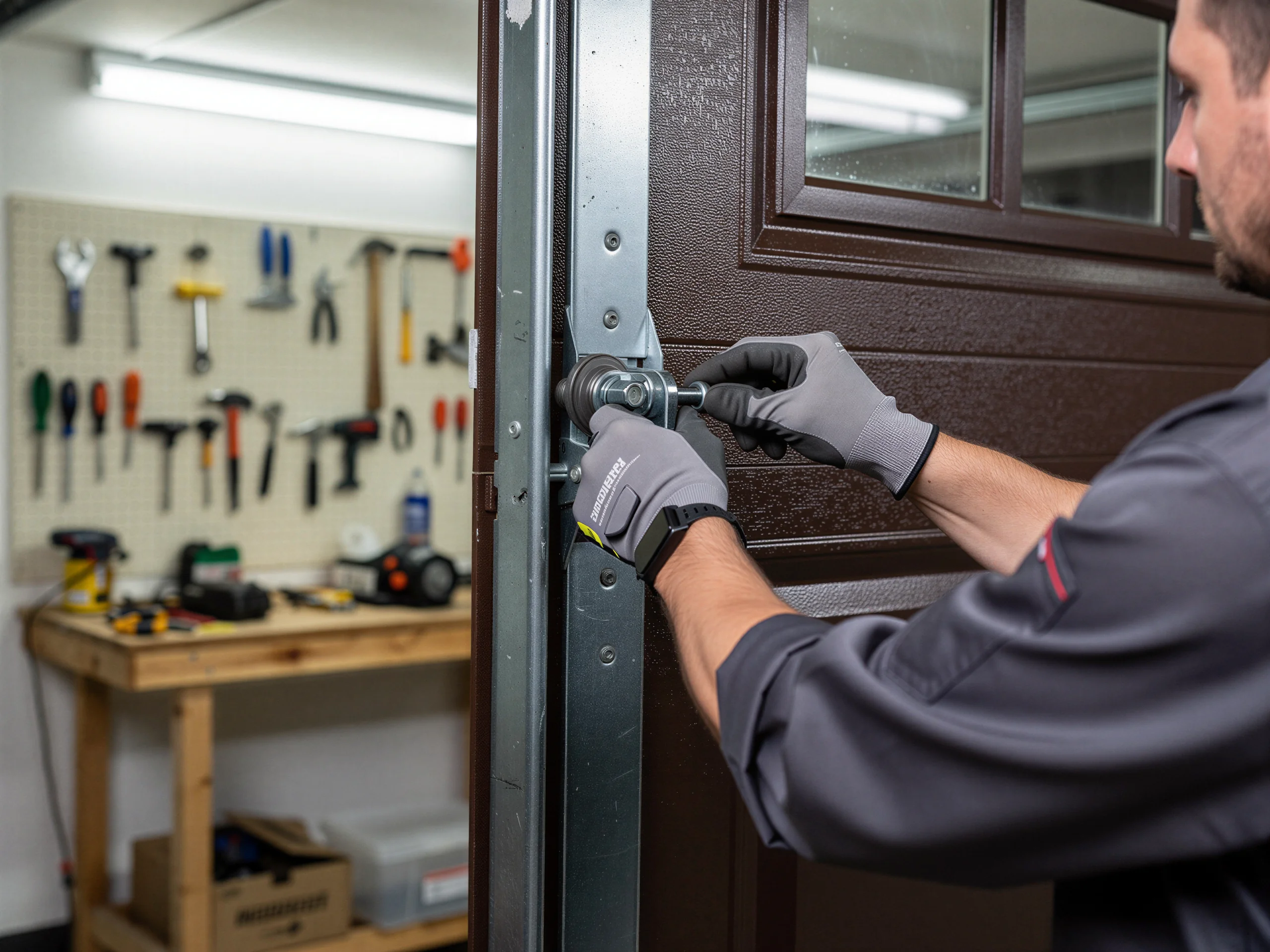
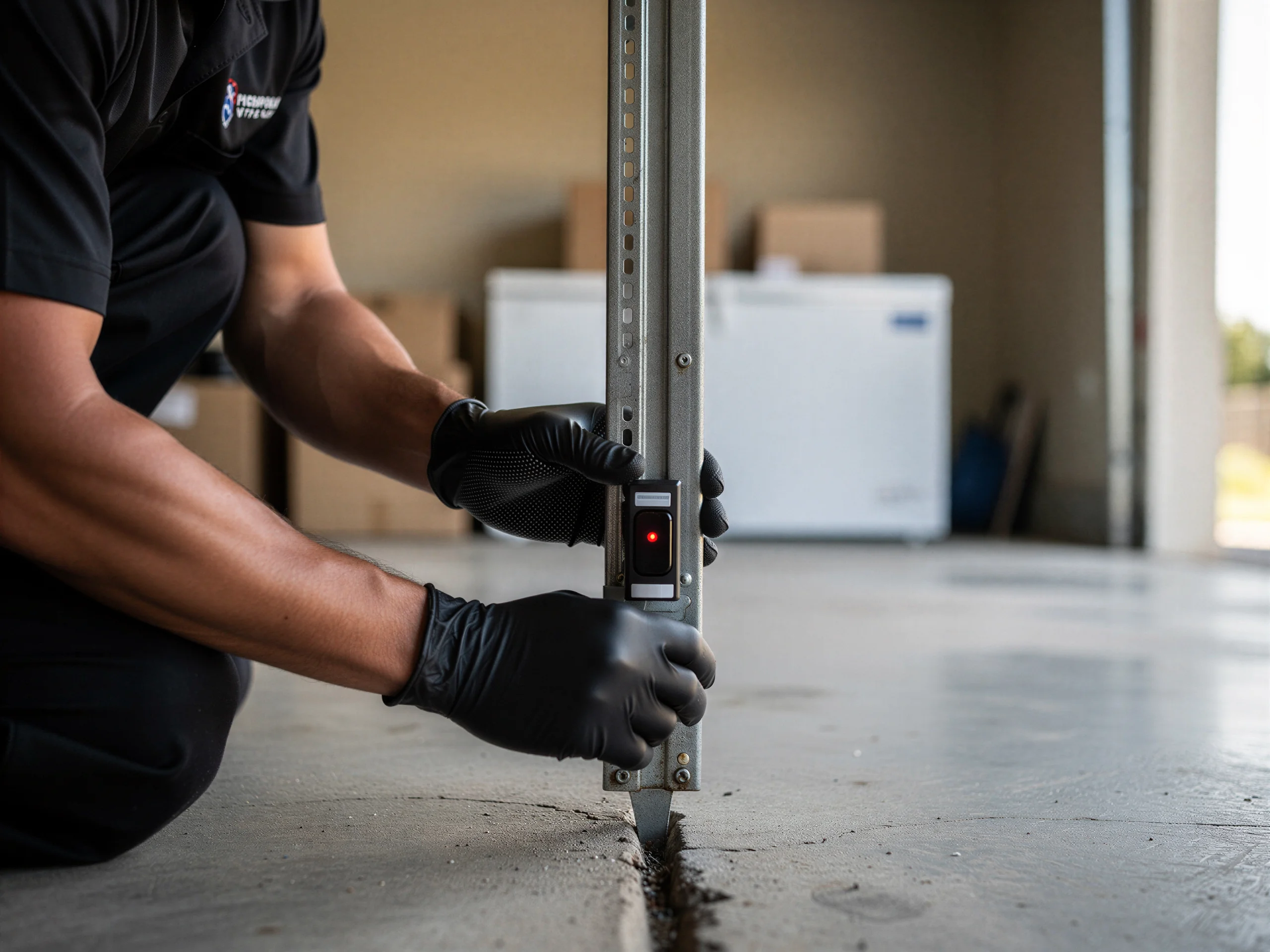
This area sits in a cold-moderate climate band, which doesn't mean brutal winters but does mean real seasonal temperature swings across a single steel panel. Builder-grade doors from the mid-2000s typically used thinner, lower-insulation steel than what's available now, and over close to two decades of expansion and contraction that steel takes on a slight bow you can't always see standing in front of it. The result is a door that doesn't seat evenly against the weatherstrip anymore, which shows up as drafts, light gaps at the corners, or a door that needs an extra push to latch.
None of that is dramatic failure. It's slow drift, and it's common enough in the 2006-vintage stock here that we see it as the default condition rather than the exception. A new install done right means picking a panel gauge and insulation rating that matches how the garage actually gets used - attached garage against a conditioned wall is a different call than a detached structure - not just replacing like for like with what came with the house.