Local detail
What Local Conditions Do
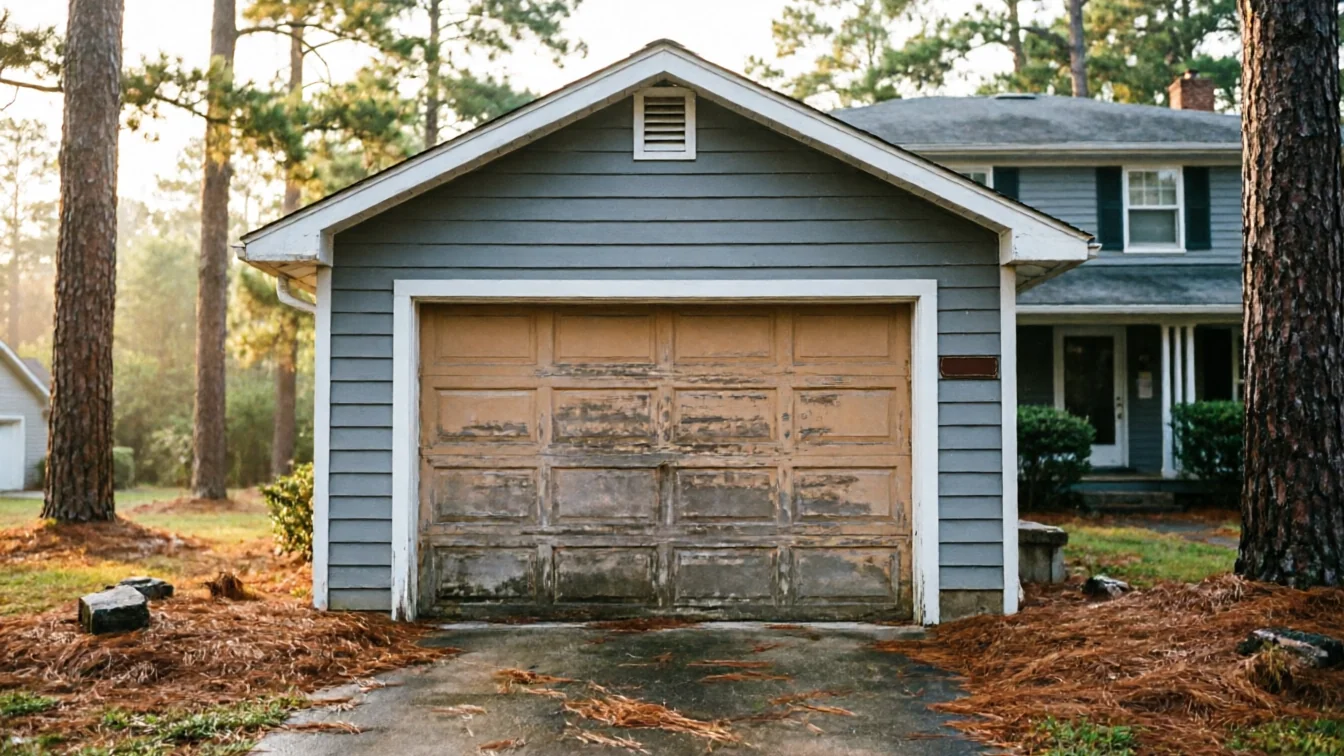
Garner's housing stock mostly dates from 1973 to 2013, with the median build year sitting at 2001, and six named areas in town carry mostly 2000s-era construction. That timeline matters more than people think. A lot of garage doors installed in homes built in the 1970s through the early 1990s went up before insulated steel doors were the standard choice builders reached for - plenty of tract construction from that era used a single uninsulated steel skin because it was cheap and the code didn't push back. Garner sits in a cold-moderate climate band, which means winter mornings get cold enough that an uninsulated panel transfers that cold straight into the garage, and if the garage shares a wall with living space, into the house. The door itself isn't broken. It's just doing what a 1980s door was built to do, which was keep rain and raccoons out, not hold heat in. If your house falls on the older end of that 1973-2013 range, there's a decent chance you're running original or close-to-original door stock.
The area
Doing Nothing For Now
Not every uninsulated door needs to come out this year. If your garage doesn't connect to living space and you're not parking anything temperature-sensitive in there, a single-layer steel door in a cold-moderate climate is a nuisance, not an emergency - it'll rattle more in the wind and feel like an icebox in January, but it'll keep functioning as a door. Where it stops being optional is when the garage is under a bonus room, next to a laundry room, or has ductwork running through it, because then the heat loss shows up on the gas bill every month, not just as discomfort. With median household income in the area at $75,289 and roughly 12,873 owner-occupied houses across the service area, a lot of owners here are weighing a door replacement against other home projects, and that's a reasonable thing to put off if the door still seals and runs smooth. What you shouldn't put off is a cracked or warped panel on an old uninsulated door - at that point you're losing the seal anyway and getting nothing for the gap.
What we find
What Most People Get Wrong
The most common mistake we see is someone assuming their door is insulated because the house itself feels well-built - these are 2000s-era homes, after all, not a drafty old farmhouse. But the door is a separate purchase from the house, and builders in a given year often spec'd whatever door met minimum cost, not whatever matched the home's actual build quality. A house finished in 2001 can still have a door with zero insulation value if that's what the builder's supplier had on the lot that month. The second mistake is weatherstripping as a fix. New bottom seal and side seals help with drafts and water, but they don't add R-value to a hollow steel panel - they just close the gaps around it. If the door itself is a single skin of steel, no amount of seal work turns it into an insulated door. People spend money on seals expecting a warmer garage and don't get it, because the problem was never the gaps.
How we work
The Problem
Across the service area's roughly 25,222 households, a meaningful share are sitting in that 1973-to-2013 build window, and the ones on the older end are the most likely to still have a door with no foam core at all. In a cold-moderate climate, that's not catastrophic, but it is a steady, invisible cost - more furnace runtime, a colder garage for anyone storing paint or batteries out there, and a door skin that expands and contracts more with temperature swings, which over the decades loosens screws and stresses hardware faster than an insulated panel does. We can't tell you the exact R-value or age of your specific door without seeing it - that's not something we can state from housing-era data alone, and we won't guess. What we can say is that build year is a reasonable first clue, and if your house is on the earlier end of Garner's range, it's worth having someone look at what's actually hanging in that opening.
Talk to a local pro
Garage door trouble in Garner?
Same-day service with honest, upfront quotes.