Local detail
What Local Conditions Do
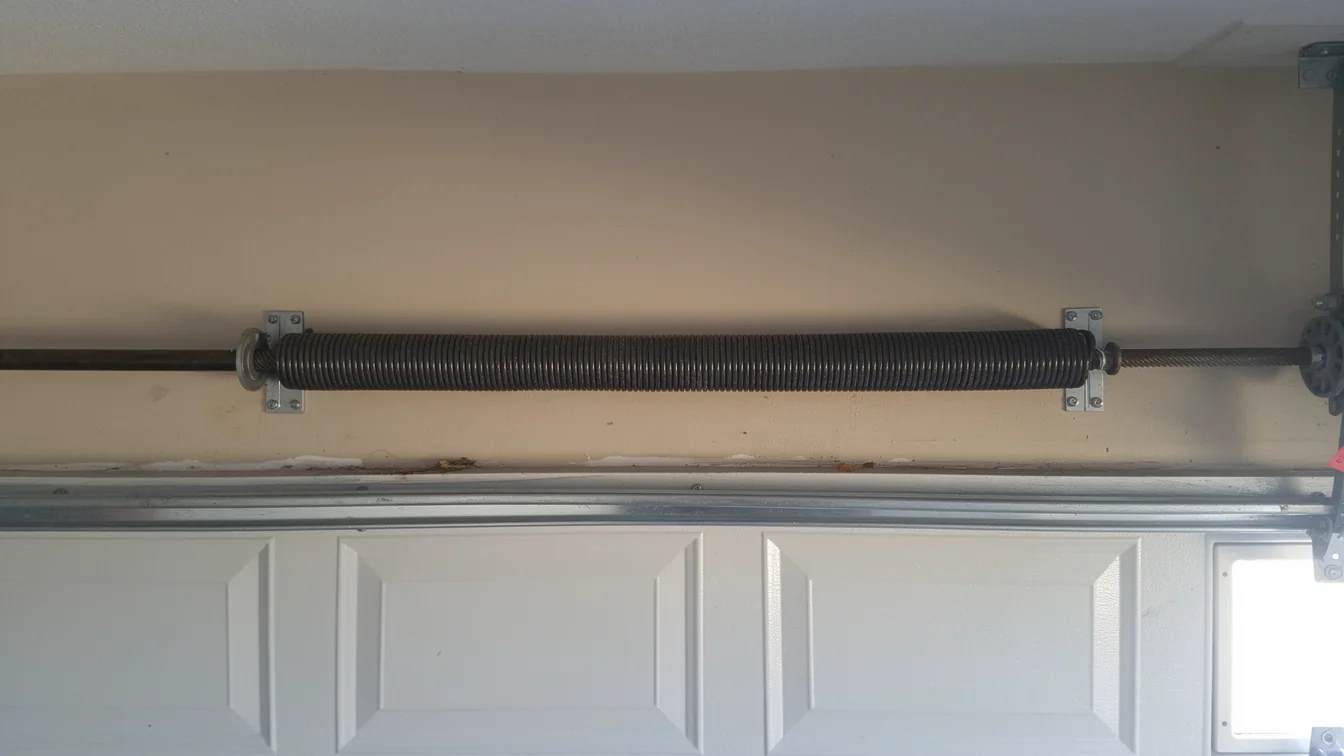
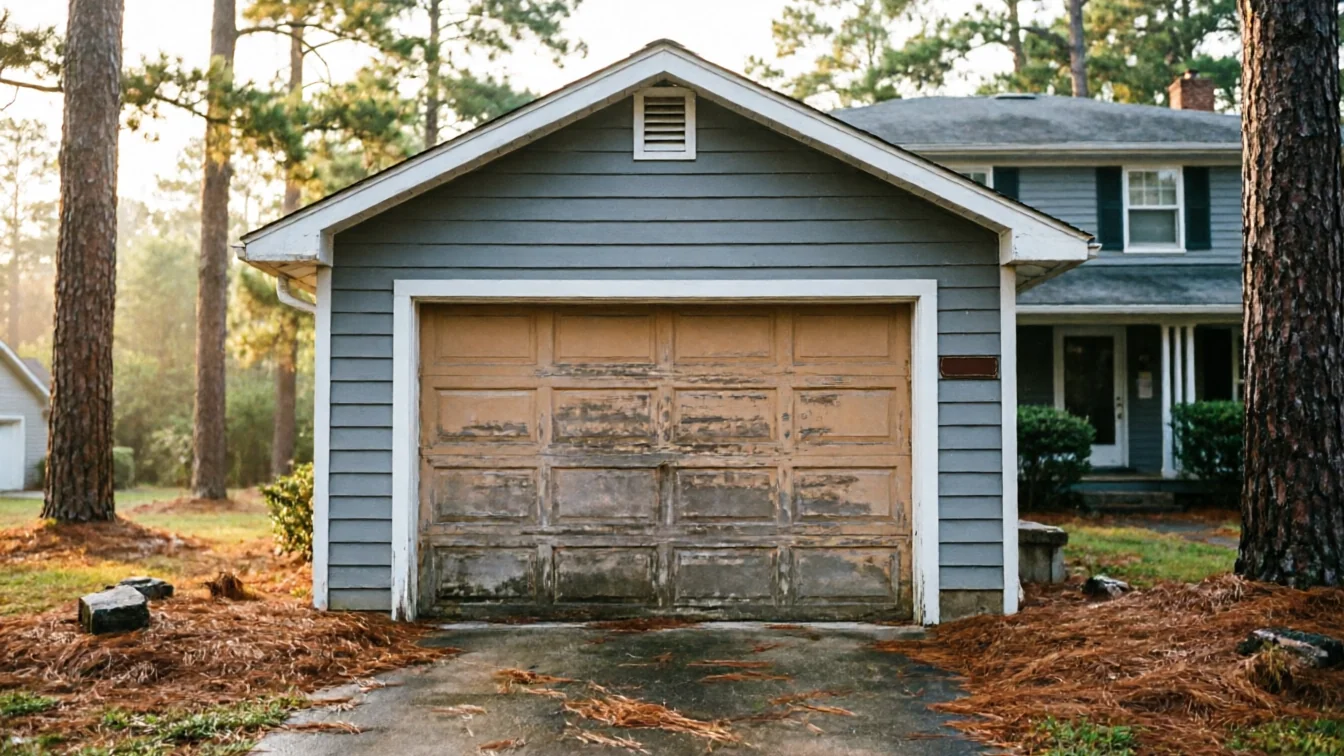
Garner's housing stock runs 1973 to 2013, with the median build year landing at 2001, and it's concentrated across six named areas that mostly went up in the 2000s. That matters more than people think. A door from a 2001-era build is now old enough that its torsion spring, if original, is past the cycle count most springs are rated for, but the opener and track hardware from that period are usually still serviceable if they've had any maintenance at all.
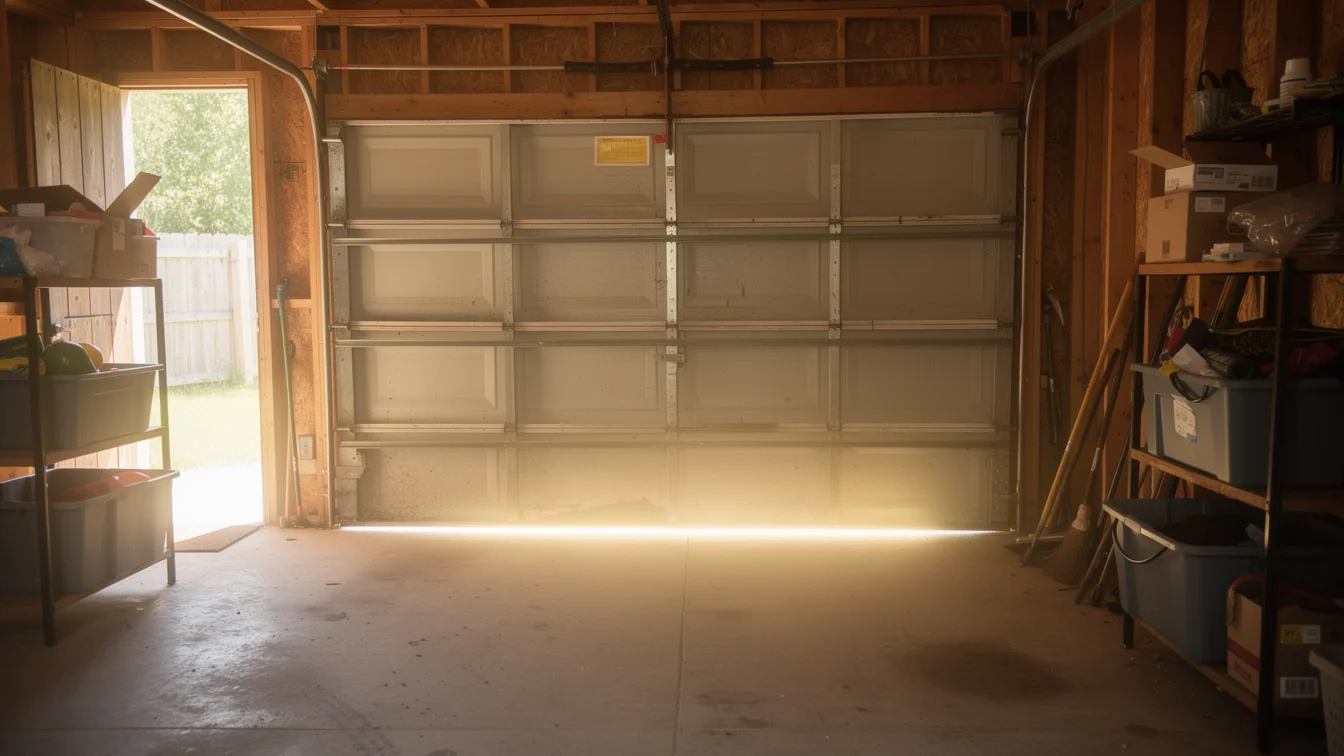
Our climate band here is cold-moderate, not the harsh freeze-thaw of the mountains or the heavy humidity of the coast. That means we don't see the aggressive rust failures you'd get further north, but we do see hardware that's stiffened from cold mornings and springs that lose tension gradually rather than snapping outright. A door that's hard to lift on a 30-degree morning in a house built in 2003 is telling you something different than the same symptom would mean in a house built last year.
The area
Doing Nothing For Now
If your house falls in that 1973-2013 build window and the door still opens level, seats square, and the opener doesn't grind or reverse on its own, you don't need to replace anything yet. A lot of Garner homeowners call us assuming a slow or noisy door means a new unit, when it's really a spring that's lost tension or rollers that never got lubricated.
We'll say this plainly: if the panels aren't dented, the track isn't bent, and the door balances by hand when disconnected from the opener, waiting is a reasonable choice. Across the roughly 12,873 owner-occupied houses in our service area, most of the doors we see in that condition get another decade out of them with a spring swap and a tune-up, not a full replacement.
What we find
What Most People Get Wrong
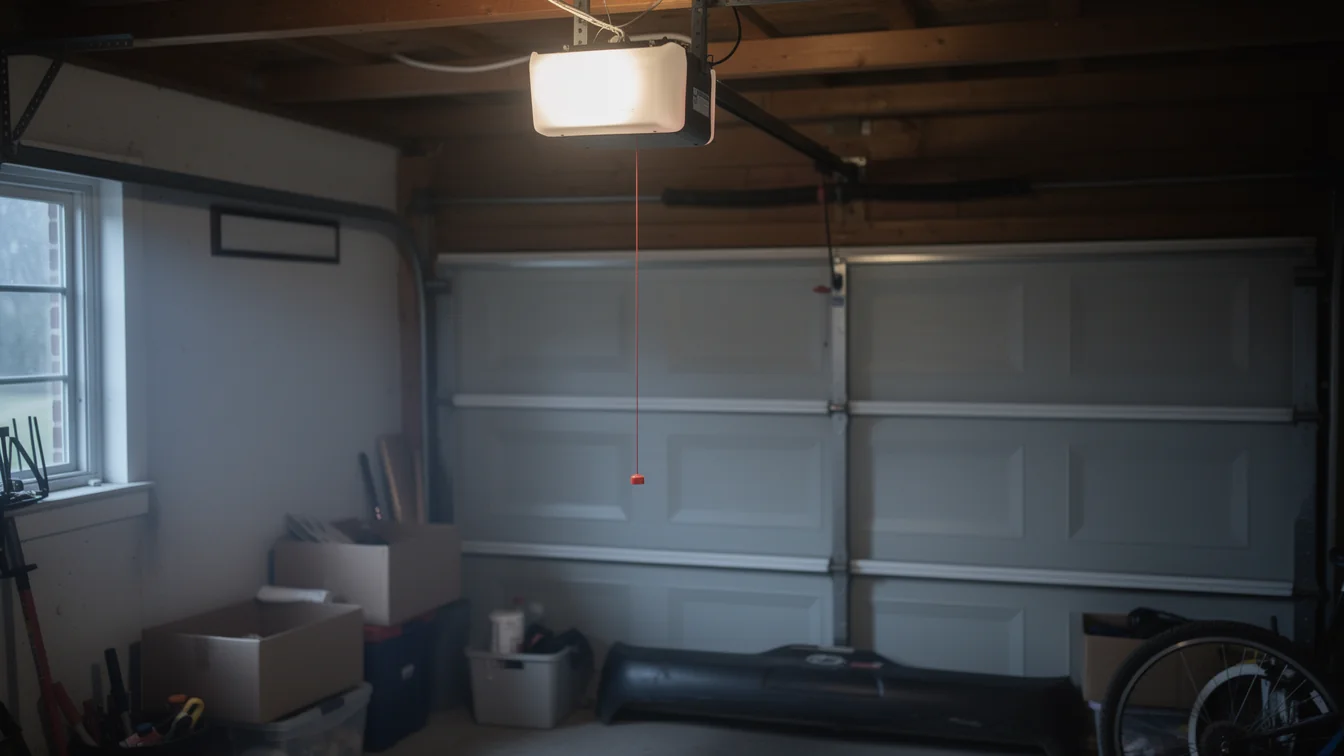
The mistake we see most in the 2000s-era subdivisions is treating every symptom as an opener problem. People replace the opener, the door still binds, and they call us confused. In a house built around 2001, the opener is often not the original unit anyway - it's a second or third one - while the door itself, the track, and the spring are original to construction and are what's actually aged out.
The other mistake: assuming our climate justifies upgrades meant for harsher regions. Cold-moderate doesn't mean you need the insulation package or the heavy-duty spring rating sold for northern winters. Matching the door to what this area actually sees saves money without under-building it.
How we work
The Problem
Here's the honest limit: once a door is original to a house built before the mid-1980s end of our local range, parts availability gets thin. Panel sections and some older track hardware simply aren't stocked anymore, and we won't quote a repair that depends on parts we can't get in a reasonable timeframe. In that situation, replacement isn't an upsell, it's the only real option.
For the bulk of Garner's housing, built through the 1990s and into the median 2001 range, we can still source springs, rollers, and cables without trouble. That's the dividing line we use on a call: if your house is on the newer half of that 1973-2013 range, fixing almost always makes sense first.
Talk to a local pro
Garage door trouble in Garner?
Same-day service with honest, upfront quotes.