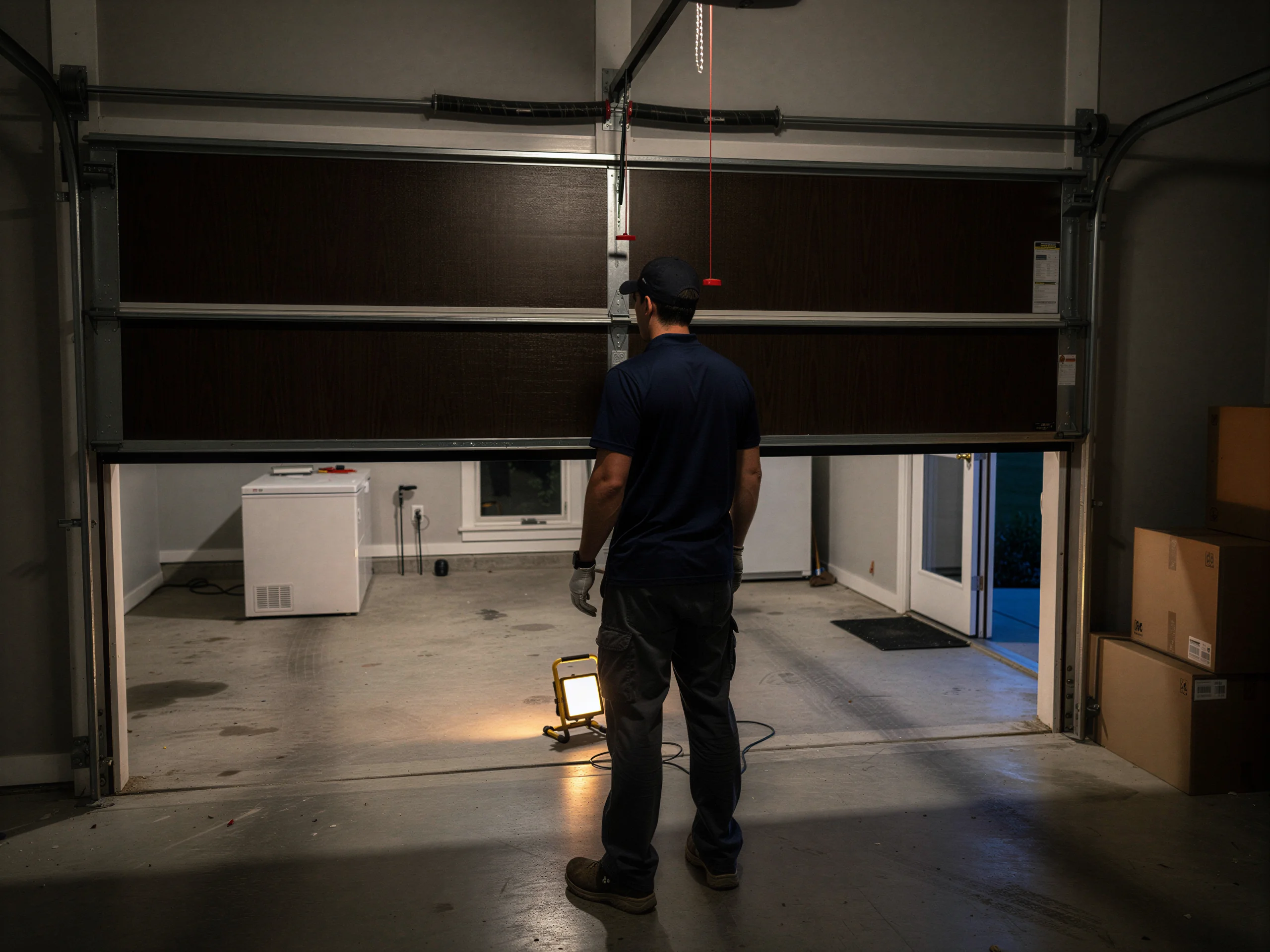
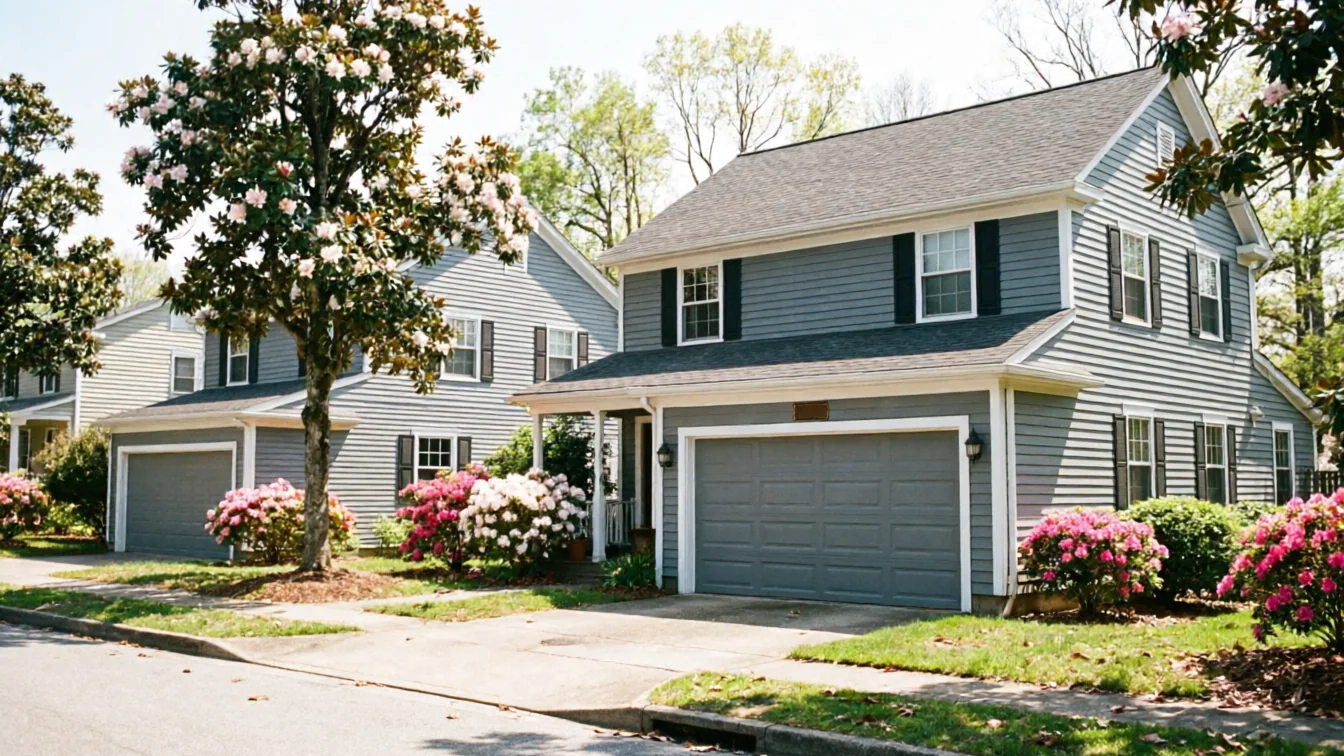
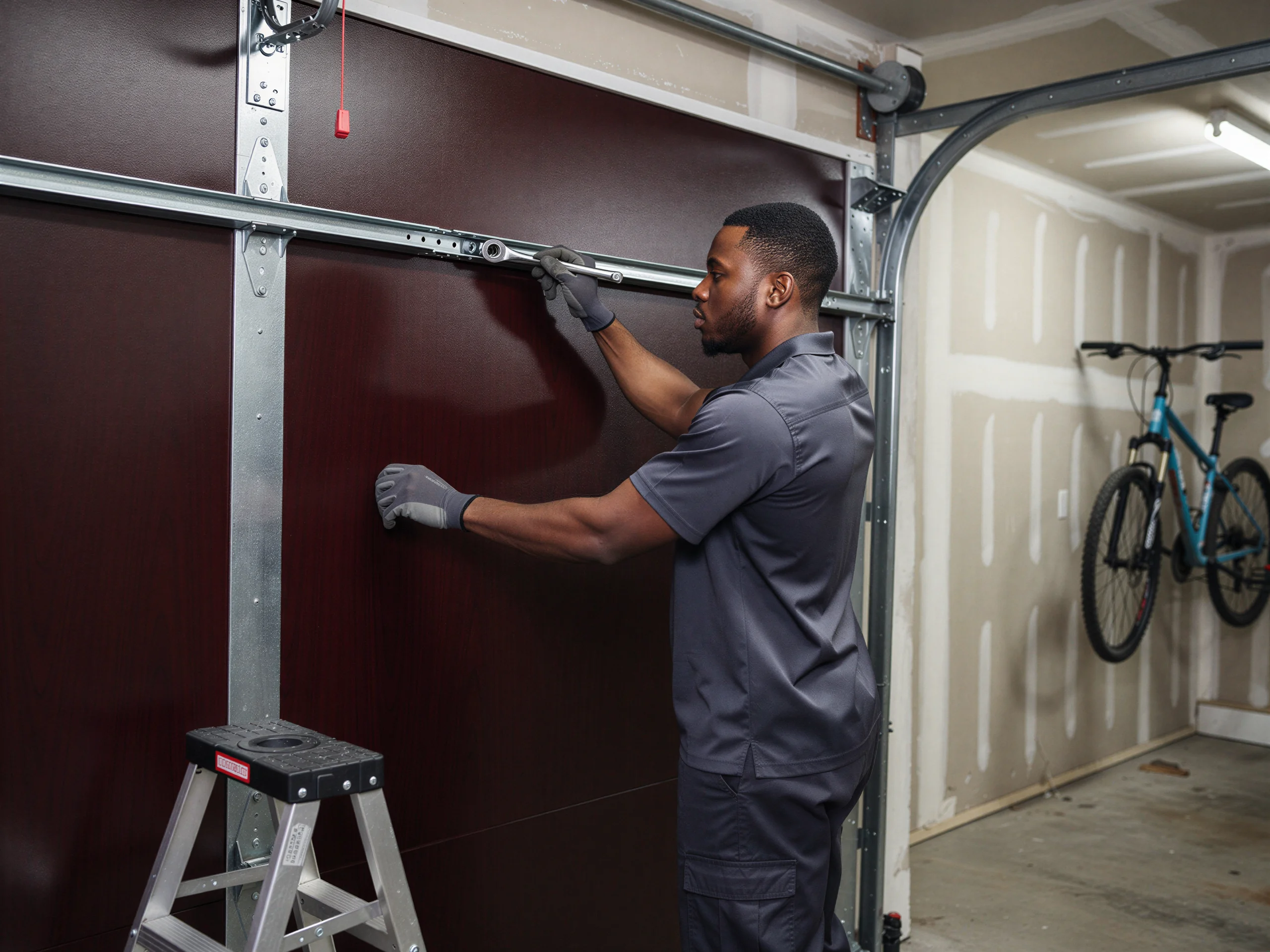
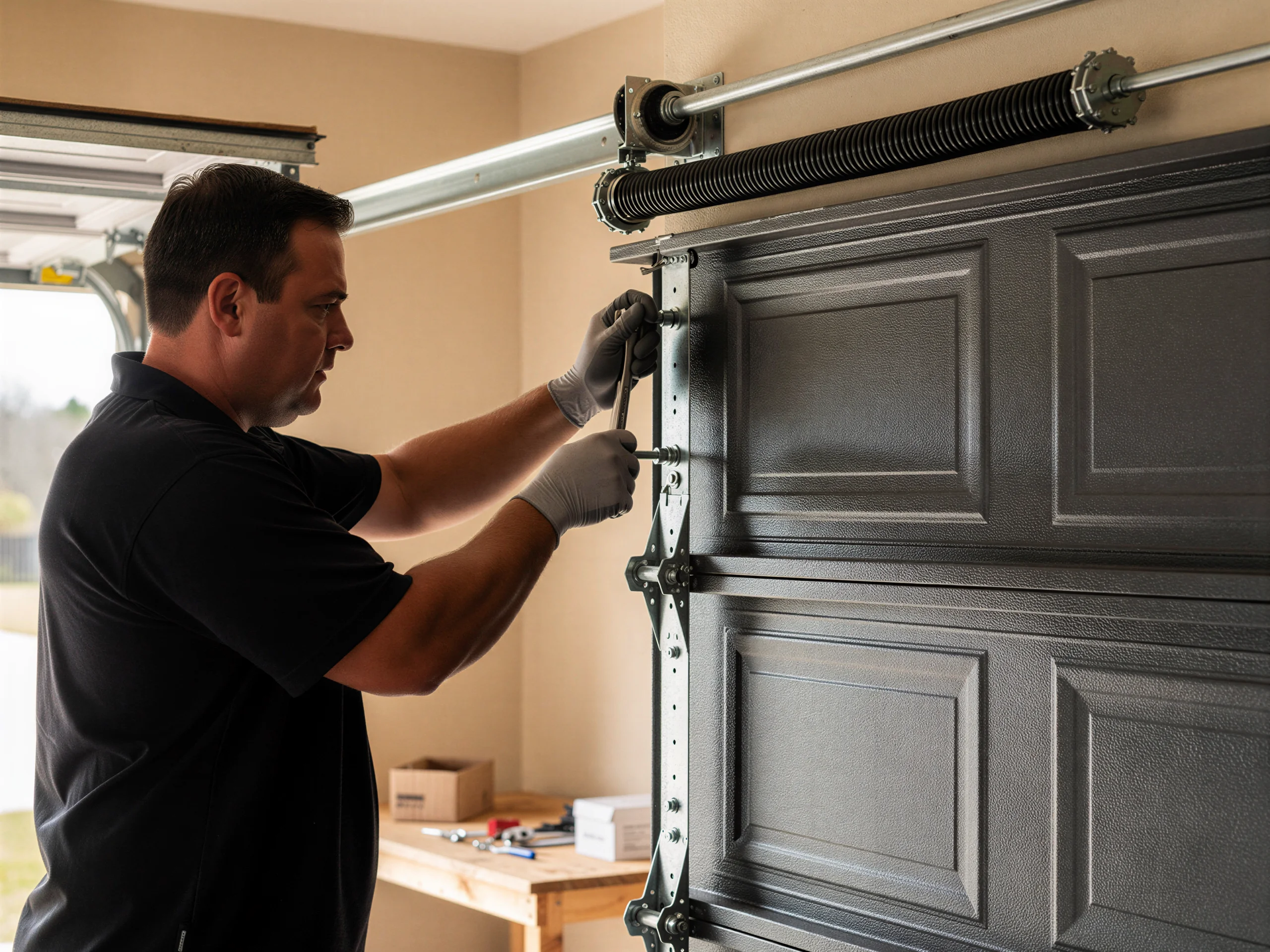
The climate here falls in the cold-moderate band, which means freeze-thaw cycling through the winter rather than the deep hard freezes you'd get further north. That cycling is hard on galvanized torsion springs and on the nylon rollers common in 2000s-era doors - the metal fatigues faster with repeated contraction and expansion than it would in a steadier climate, and springs rated for a certain cycle count hit that count sooner.
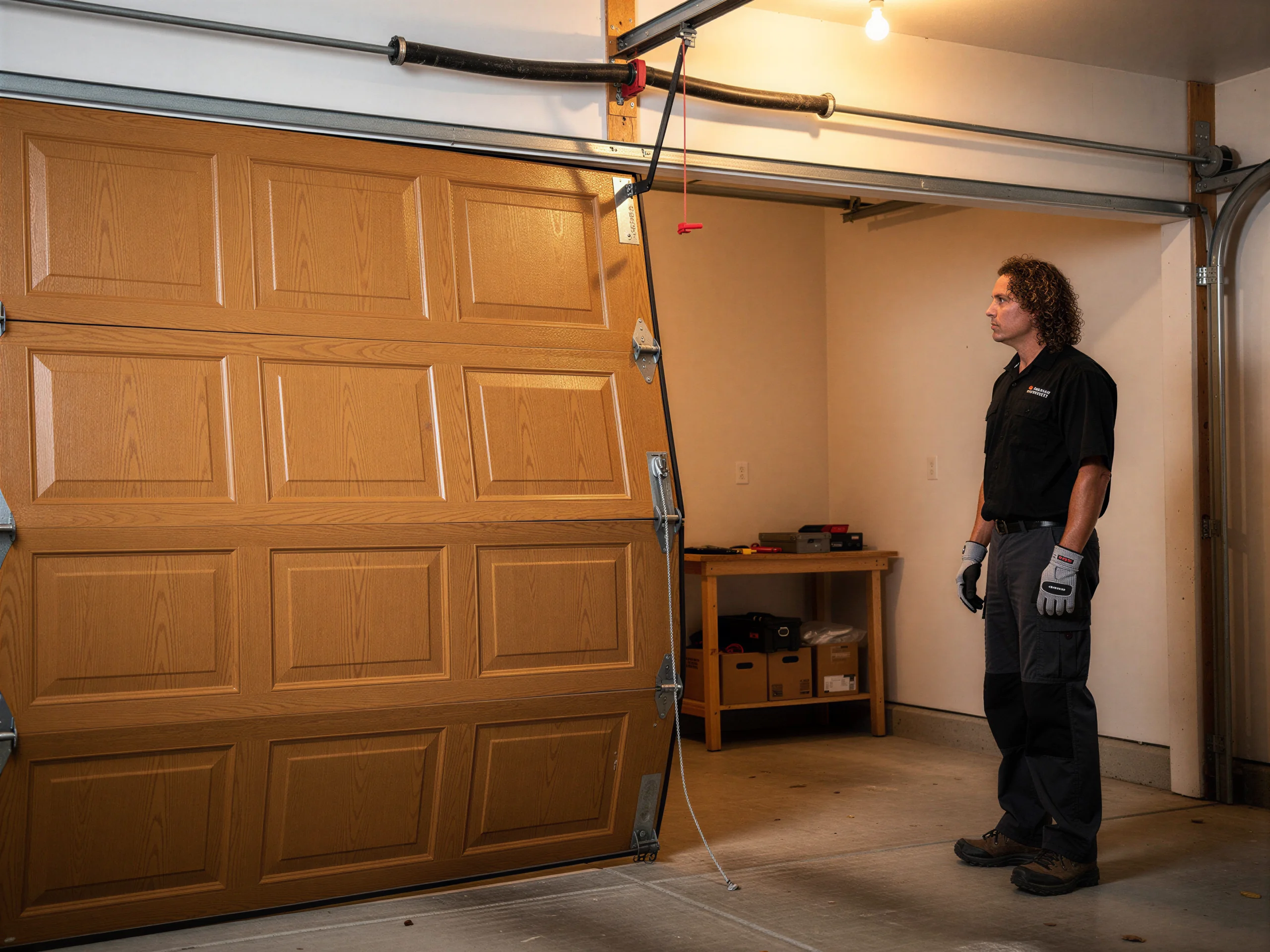
Because most of the six named areas in our broader territory carry similar 2000s-era stock, we're used to that spring-fatigue pattern, but Knightdale's own numbers put it closer to the newer end of that range than most. Newer doesn't mean failure-proof - it means the springs failing now are first-generation springs on these houses, not a second or third replacement. When one goes, it tends to go without much warning: a loud bang, then a door that won't lift, rather than the slow sag you'd see on an older worn-out system.